


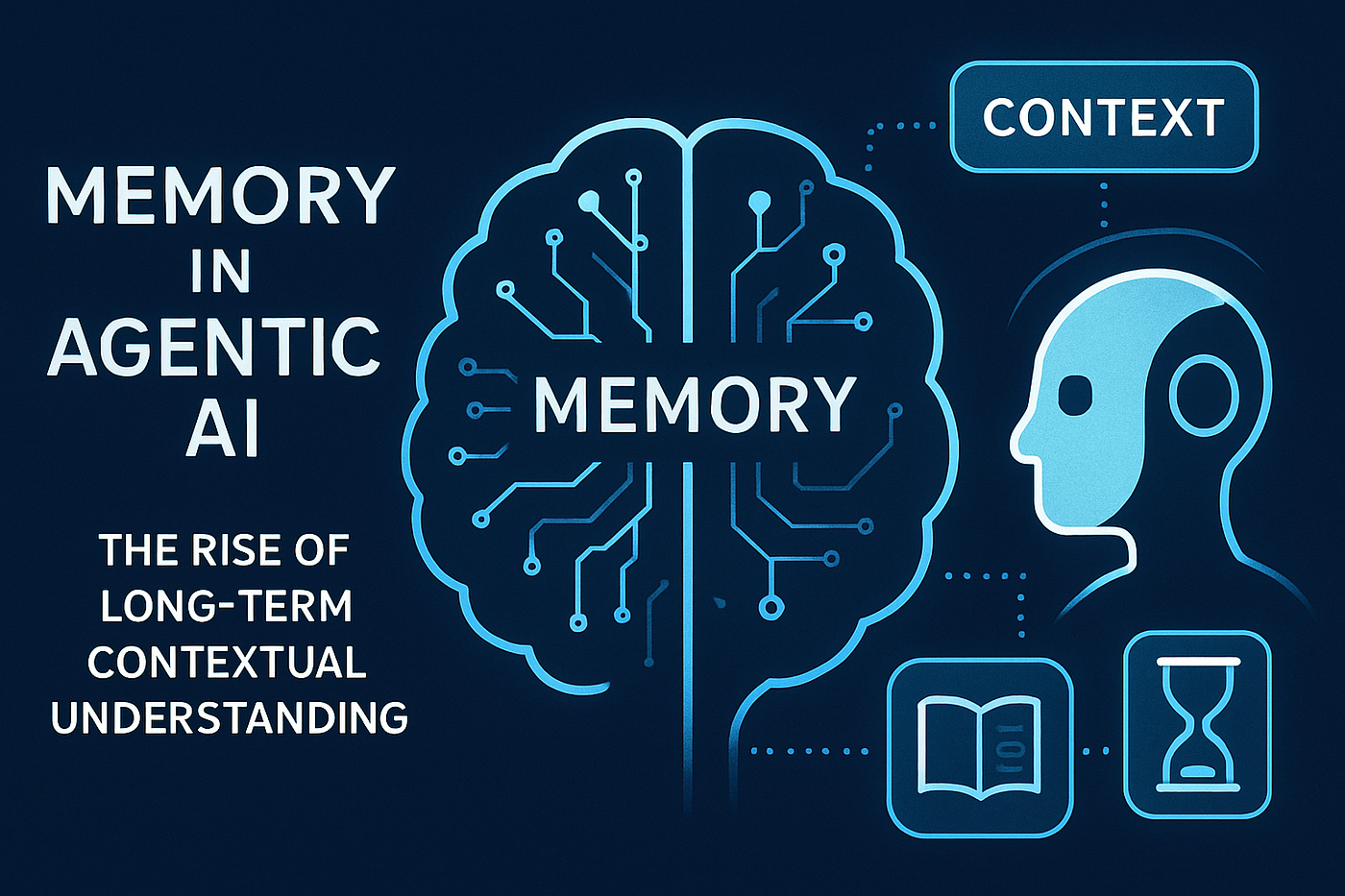
Agentic AI solutions systems distinguish themselves from traditional AI models through autonomy, reasoning, and adaptability. However, one of the most critical components enabling these capabilities is memory. Without memory and contextual awareness, an AI system can only respond to immediate inputs. With structured memory systems, agentic AI becomes capable of sustained reasoning, long-term planning, and adaptive decision-making. In enterprise environments where workflows span multiple steps, stakeholders, and timeframes, memory and context form the backbone of intelligent autonomy.
Why Memory Matters in Agentic AI
Traditional generative models process information within a limited context window. Once a session ends, the system forgets previous interactions unless explicitly retrained. Agentic AI models, by contrast, rely on persistent memory layers that allow them to maintain awareness of past actions, decisions, and results.
This persistence enables agents to refine strategies over time, recognize patterns across workflows, and avoid repeating mistakes. In enterprise applications such as customer service, supply chain coordination, and financial reporting, memory ensures continuity and accuracy.
Types of Memory in Agentic Systems
Advanced agentic AI architectures typically incorporate multiple memory layers, each serving a different function:
Working Memory stores short-term context related to the current task. This includes instructions, intermediate outputs, and temporary reasoning steps.
Episodic Memory captures historical interactions and task outcomes. It allows the agent to recall previous incidents, decisions, and feedback.
Semantic Memory connects to structured knowledge bases, enterprise documentation, and external data sources.
Long-Term Operational Memory records workflow patterns, performance metrics, and recurring exceptions.
Together, these memory layers create a comprehensive context engine that supports autonomous reasoning.
Contextual Awareness in Dynamic Environments
Context is more than stored information; it is the ability to interpret data relative to current objectives and environmental conditions. Agentic AI systems analyze user roles, regulatory constraints, business priorities, and historical trends before making decisions.
For example, a procurement agent evaluating vendor contracts must consider previous performance metrics, budget constraints, compliance requirements, and delivery timelines. Without contextual awareness, the agent’s decisions would lack strategic alignment.
Enabling Multi-Step Planning Through Memory
Agentic AI systems break complex objectives into subtasks through hierarchical planning. Memory ensures each step aligns with the overall objective.
If an agent is tasked with generating a quarterly business report, it must retrieve historical sales data, validate financial consistency, apply forecasting models, and align results with prior performance benchmarks. Memory ensures that insights from earlier stages inform later actions, creating coherent and accurate outputs.
Reducing Redundancy and Improving Efficiency
Memory-driven systems eliminate repetitive processing. Instead of recalculating or reanalyzing previously validated data, agents reference stored knowledge.
This efficiency is particularly valuable in enterprise environments where recurring workflows are common. Agents can recognize patterns and streamline execution based on past experience, significantly reducing processing time and resource consumption.
Enhancing Personalization and User Experience
In customer-facing applications, contextual memory enhances personalization. Agentic AI solutions and services can remember previous interactions, preferences, and support history.
For example, a customer service agent can anticipate recurring issues, recommend solutions proactively, and adapt tone or recommendations based on past conversations. This continuity builds trust and improves customer satisfaction.
Memory-Driven Learning and Adaptation
Agentic AI systems improve through feedback loops. Memory allows them to store performance outcomes and adjust strategies accordingly.
If a remediation strategy fails in IT operations, the agent records the unsuccessful attempt and avoids repeating it under similar conditions. Over time, this creates a continuously learning system capable of adaptive optimization.
Challenges in Memory Architecture
Implementing memory in agentic systems presents architectural and governance challenges. Persistent storage requires secure data management, privacy compliance, and access control mechanisms.
Data retention policies must align with regulatory frameworks. Enterprises must also ensure memory systems remain accurate and free from outdated or biased information. Continuous validation and pruning processes are essential for maintaining integrity.
Balancing Memory and Computational Efficiency
While memory enhances intelligence, excessive context can increase computational overhead. Advanced architectures implement retrieval-based memory systems that selectively access relevant information rather than processing entire datasets.
Vector databases, indexing systems, and context prioritization mechanisms ensure efficient retrieval without overwhelming the reasoning engine.
Governance and Ethical Considerations
Persistent memory raises ethical considerations related to data privacy, bias reinforcement, and transparency. Enterprises must establish governance policies defining what data agents can store, how long it can be retained, and who has access to it.
Explainability frameworks should provide visibility into how contextual data influences decisions. Transparency strengthens trust in autonomous systems.
The Strategic Value of Contextual Intelligence
As enterprises adopt agentic AI at scale, memory-driven contextual intelligence becomes a competitive differentiator. Systems capable of understanding long-term patterns and adapting to changing conditions provide greater resilience and strategic agility.
In industries such as finance, healthcare, manufacturing, and retail, contextual awareness enables proactive decision-making rather than reactive responses.
Final Thoughts
Memory and context are foundational to advanced agentic AI models. They transform isolated task execution into sustained, intelligent action aligned with enterprise objectives. By integrating layered memory architectures and contextual reasoning engines, organizations can deploy autonomous systems that learn, adapt, and improve continuously.
As agentic AI continues to evolve, memory-driven intelligence will define the next generation of autonomous enterprise systems.
